Your loyal partner
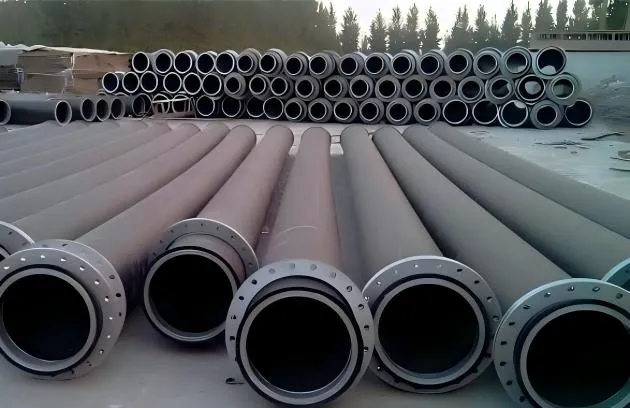
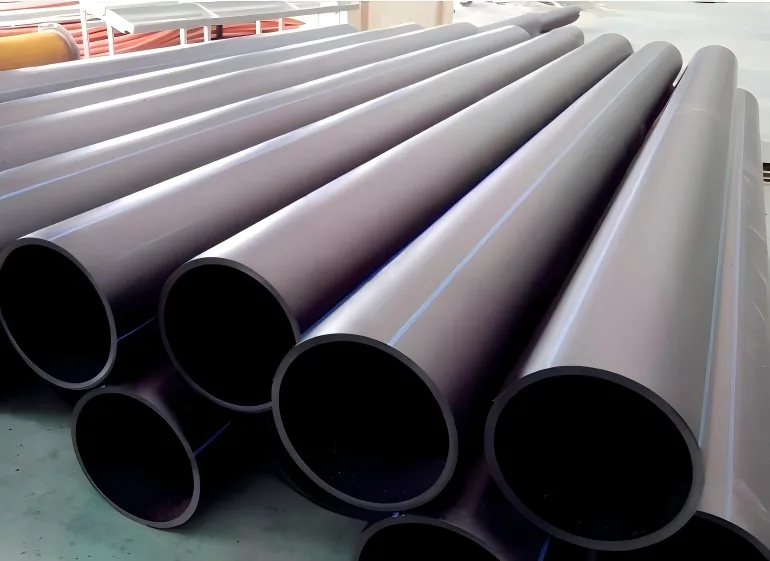
Boasting exceptional comprehensive performance, HDPE pipes and fittings are widely applicable across multiple fields such as municipal construction, industrial production, and ecological environmental protection, emerging as a preferred alternative to traditional pipes. Their specific application scenarios and core advantages are as follows:
HDPE pipes possess comprehensive advantages including safety, sanitation, and convenient construction. They can effectively ensure water quality safety during drinking water transmission, with high installation efficiency and low long-term maintenance costs, making them an ideal choice for urban water supply network construction.
Relying on core advantages such as reliable connection, stable performance, convenient construction, and corrosion resistance, HDPE pipes have become the preferred material for medium and low-pressure natural gas transmission pipelines. Their excellent sealing performance and aging resistance can significantly enhance the operational safety and service life of gas transmission systems.
HDPE pipes feature outstanding chemical stability, enabling safe transportation and discharge of various acid, alkali, and salt solutions. They can effectively avoid contamination or damage caused by chemical reactions between the pipe and the medium. Meanwhile, their long service life and low maintenance costs significantly reduce the pipeline operation costs in chemical production and food processing fields.
The wear resistance of HDPE pipes is four times that of steel pipes, endowing them with extremely strong wear resistance. They are widely applicable to harsh working conditions such as ore sand transportation, power plant fly ash transportation, and river dredging slurry transportation. Their wear-resistant characteristics can significantly reduce pipe loss, lowering replacement frequency and operation and maintenance costs.
For the renovation of old urban pipelines such as original cement pipes and cast iron pipes, HDPE pipes can adopt the “in-situ insertion replacement” technology. There is no need for large-area road excavation; the renovation can be completed by directly inserting HDPE pipes into the old pipes. This solution has a short construction period and low renovation cost, making it particularly suitable for pipeline renovation in old urban areas and minimizing the impact on surrounding traffic and residents’ lives.
Landscaping projects require the laying of a large number of water supply pipelines. HDPE pipes, with advantages such as low cost, convenient construction, and strong environmental adaptability, can meet the diverse needs of landscaping irrigation. They are the preferred material for pipeline laying in this field and are worthy of vigorous promotion and application.
HDPE pipes can also be widely applied in various scenarios such as power and communication casings, farmland irrigation, siphonic drainage, landfill leachate collection, ground-source heat pump air conditioning systems, deep-sea aquaculture pipelines, and buried fire-fighting pipelines. Their scope of application covers multiple industries including industrial and civil construction, agriculture, and environmental protection.
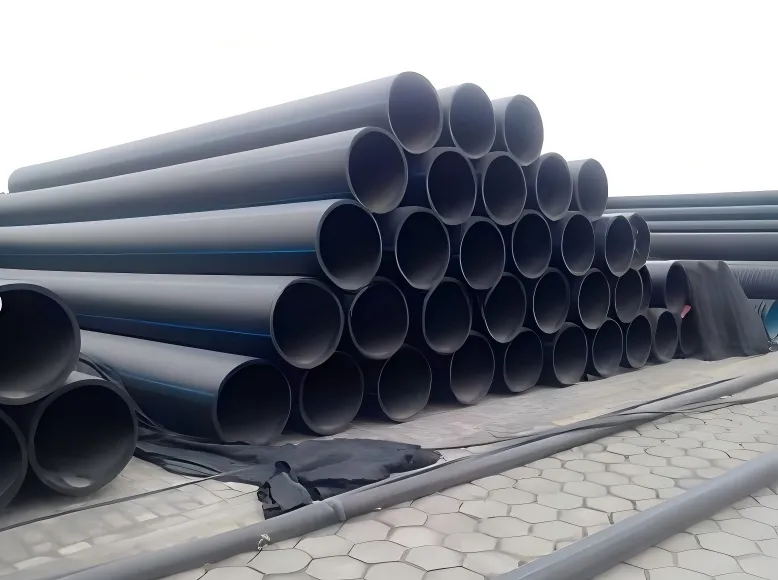
Adopting heat fusion connection technology, the joints are seamlessly integrated with the pipe body, completely eliminating leakage risks while significantly shortening the installation period. The strength of the fusion joints is equivalent to that of the pipe itself, enabling long-term leak-free operation of the system and significantly reducing long-term maintenance requirements and costs.
The pipe material does not leach harmful substances into water, fully meeting the safety requirements for drinking water transmission. Meanwhile, it has extremely strong corrosion resistance and anti-scaling capabilities, without rusting or scaling, which can maintain long-term pipeline unobstructed and ensure stable system design flow.
Compared with brittle pipe materials such as PVC and ductile iron, HDPE pipes have stronger toughness and better durability, with a minimum bending radius of up to 20 times the pipe diameter. When laid under complex geological conditions, they can better adapt to foundation settlement and terrain changes, reducing the risk of pipeline breakage.
HDPE pipes are among the best in terms of impact and fatigue resistance in drinking water transmission systems. They can withstand occasional pressure surges up to twice the rated pressure and repeated pressure fluctuations up to 1.5 times the rated pressure, effectively coping with sudden pressure changes during pipeline operation.
HDPE pipes can operate stably within a wide temperature range of -40°F to 140°F (approximately -40℃ to 60℃), making them suitable for regions with different climatic conditions. They also have excellent freeze-thaw resistance and will not be damaged by repeated freeze-thaw cycles, ensuring system reliability in low-temperature environments.
HDPE pipes can be constructed using trenchless technologies such as directional drilling, pipe bursting, slip-lining, and compression fit lining, requiring narrower trench widths. Trenchless construction can minimize disturbances to the surrounding environment, significantly reducing the workload and cost of post-construction restoration projects such as road and greening repairs. Compared with traditional excavation construction, it can achieve a cost saving of up to 65%.