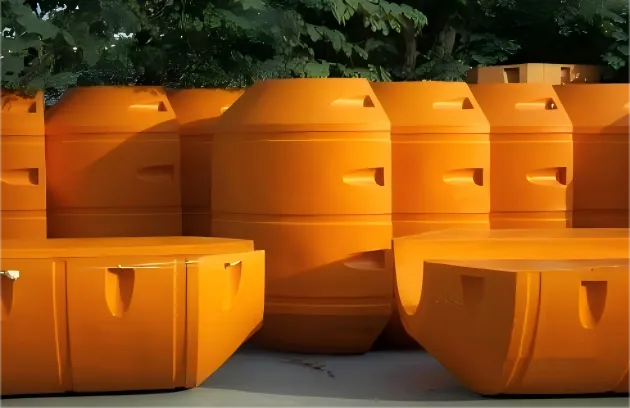
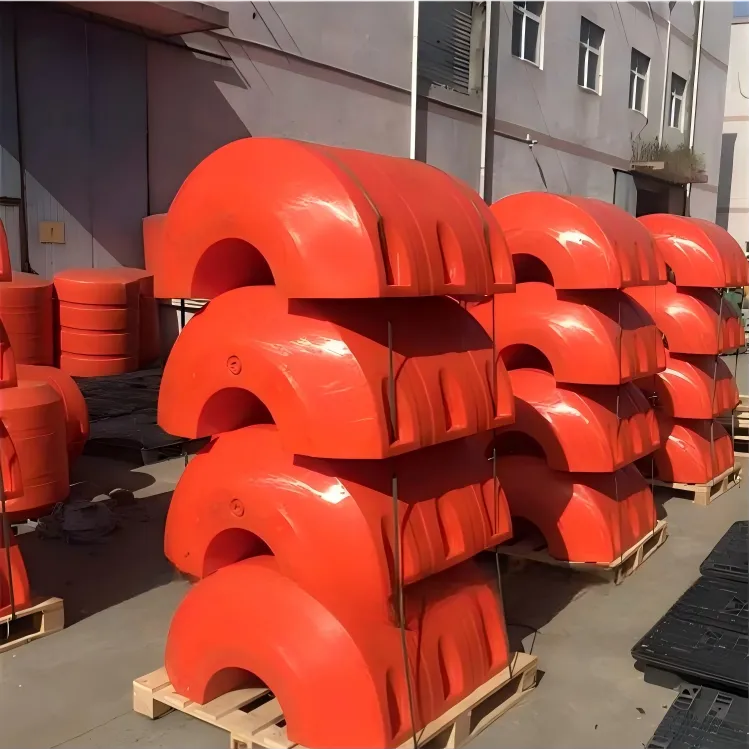
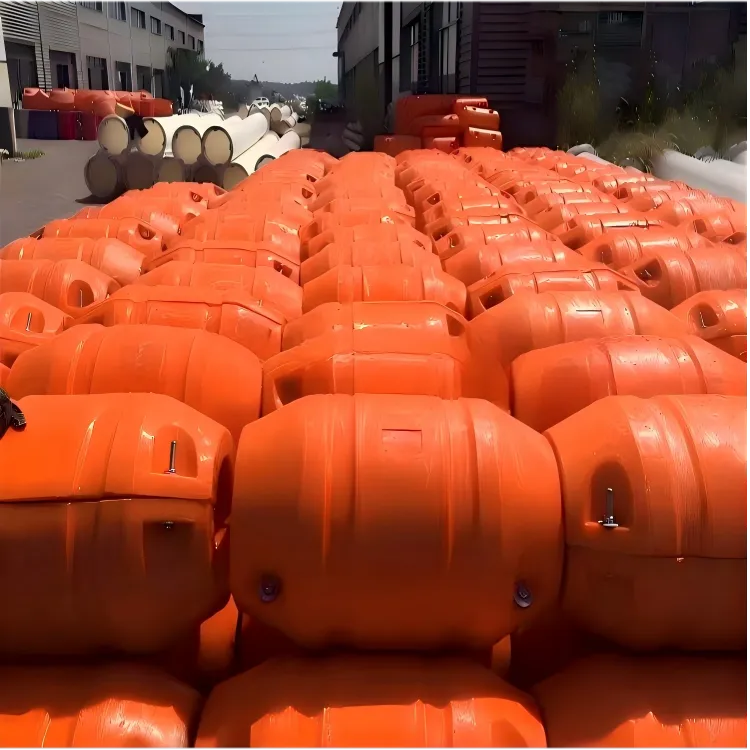
Polyethylene floaters are core auxiliary components widely used in global dredging and land reclamation projects. Boasting the advantages of compact size, light weight, strong buoyancy, wind resistance, aging resistance and long service life, they have become the ideal floating support material for dredging pipelines.
To ensure the stable operation of dredging systems, it is critical to distinguish high-quality polyethylene floaters from inferior products. Below we detail the material characteristics and key inspection criteria of qualified floaters.
Basic Structure of Premium Polyethylene Floaters
High-quality polyethylene floaters adopt a two-layer composite structure for reliable performance:
- Outer Shell: Made of medium-density polyethylene (MDPE), which provides excellent impact resistance and corrosion resistance to adapt to harsh marine environments.
- Internal Filling: Filled with closed-cell polyurethane foam to ensure 100% leakproofness and stable buoyancy.
Compared with traditional steel pontoons, this structure delivers a service life of over 50 years. Since being introduced to China in 1998, polyethylene floaters have been promoted and applied for more than a decade, and have been widely recognized by domestic and foreign dredging enterprises.
Key Inspection Criteria for Floater Quality
To ensure safe and efficient use, the following five aspects must be inspected when selecting polyethylene floaters:
- Buoyancy Performance: The buoyancy of the floater should generally exceed 30% of the total weight of the dredging pipeline (including the sand-water mixture with a density of 1.3). In actual operation, this standard ensures that about 1/4 of the pipeline height remains above the water surface, avoiding excessive submersion and pipeline wear.
- Overall Weight Standard: The actual weight of the floater should not be less than 3–5% of the designed parameters. The weight of the floater is directly related to the thickness of the polyethylene shell and the density of the polyurethane foam. An excessively light floater often indicates insufficient foam filling ratio, which will seriously reduce buoyancy and service life.
- Plasticization Degree of the Outer Shell: The surface of a well-plasticized floater shell should be smooth and uniform, without obvious granular protrusions. A fully plasticized shell has optimal tensile strength and can effectively resist collision and friction in marine operations.
- Density of Internal Polyurethane Foam: The recommended foam density is about 35 kg/m³. At this density, the foam has a tensile strength of around 0.2 MPa, with moderate flexibility—it is neither sticky nor brittle, and can maintain structural stability under long-term pressure.
- Welding Firmness: The welding joints of the floater shell must be tightly sealed without gaps or cracks. If any leakage is found during inspection, supplementary welding should be carried out in a timely manner to prevent water from infiltrating the foam and reducing buoyancy.
Floaters that meet all the above technical standards are high-quality qualified products that can provide reliable support for dredging operations.
Summary
For engineering teams, paying close attention to these quality details when selecting polyethylene floaters is not only related to the service life of the equipment, but also directly determines the construction efficiency of offshore dredging projects.
If you are undertaking projects that require dredging pipelines with matching floaters, welcome to contact our professional technical team for customized solutions and product recommendations.
Would you like me to add a quality inspection checklist table for this article, so that readers can check floater quality more conveniently?
=