

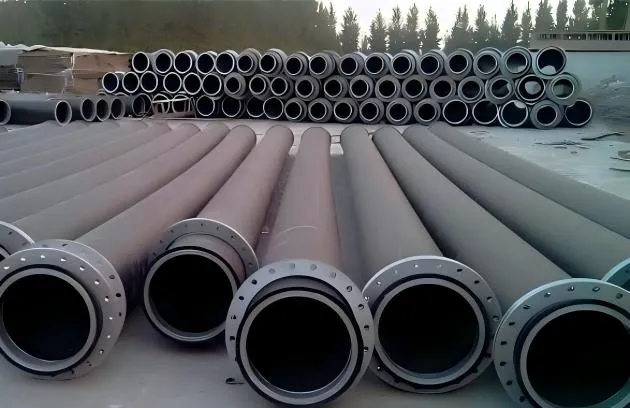
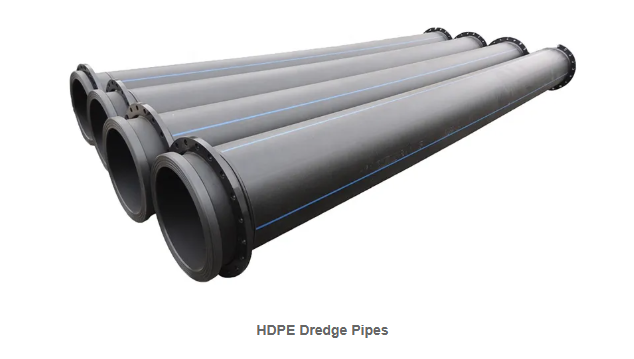
HDPE (High-Density Polyethylene) dredging pipe is one of the latest applications of polyethylene pipes. Owing to its excellent performance, high mechanical strength, and strong chemical resistance, HDPE pipe has become the preferred choice for fluid transfer systems in dredging projects. HDPE dredging pipes are manufactured based on standard polyethylene pipe specifications, typically with flanged ends.
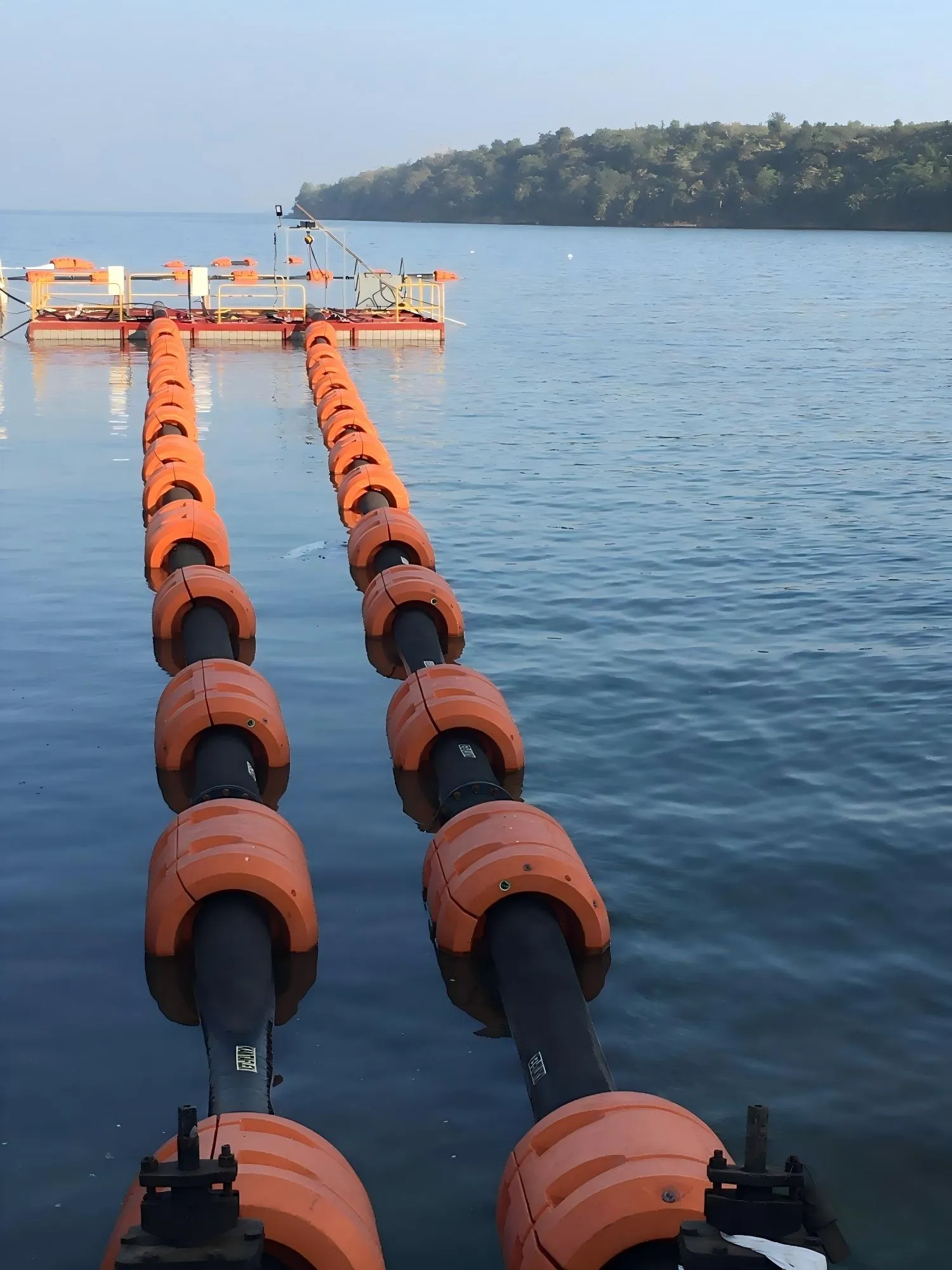
Made from high-density polyethylene material, HDPE dredging pipes are produced in a wide range of sizes. They are mainly used offshore for transporting marine sand and dredged sludge. During production, HDPE dredging pipes are welded to fittings to form HDPE flanged pipes or double-flanged HDPE pipes. Specifically, two HDPE flange adapters and two steel flanges are welded to the pipes for interconnection, and floating clamps (floats) are installed to keep the pipes afloat on the water surface. Characterized by ease of transportation, installation, and operation, HDPE dredging pipes are suitable for all types of dredger projects and outfall construction.
HDPE dredging pipes are widely favored in agricultural applications, sludge dredging, and mining projects. In many cases, these pipes are used in conjunction with floats filled with polyurethane foam. For specific projects, they may also be matched with rubber hoses or applied in marine dredger systems. Thanks to the material’s superior resistance and long service life, HDPE dredging pipes can be safely utilized in various complex application scenarios.
Advantages of HDPE Dredging Pipes
- Environmental Friendliness & Recyclability: HDPE material is recyclable, enabling reuse and reducing environmental impact.
- Strong Corrosion Resistance: It exhibits high resistance to various chemicals and is free from electrochemical corrosion, suitable for harsh working environments with corrosive media.
- Superior Wear Resistance: It boasts exceptional wear resistance, with a wear rate 4-8 times lower than that of steel pipes, and an expected service life of over five years.
- Light Weight: The weight of HDPE pipe is only 1/8 of that of steel pipe. Its light weight facilitates on-site installation and transportation, effectively shortening the construction period.
- Trenchless Installation: Multiple trenchless installation methods are applicable, minimizing damage to the surrounding environment and simplifying the construction process.
- Low Engineering Cost: It features low system investment, low maintenance costs, and a long service life, achieving significant economic benefits.
- High Toughness: The elongation at break of HDPE pipe is generally above 500%, enabling it to adapt well to uneven foundation settlement and exhibit excellent seismic performance.
- Excellent Resistance to Rapid Crack Propagation (RCP): It can effectively prevent rapid crack expansion, ensuring operational safety.
- Outstanding Flexibility: It possesses excellent flexibility and scratch resistance, adapting to complex terrain and reducing damage during transportation and installation.
- Leak-Proof Performance: HDPE pipes are connected by hot fusion welding, and the strength of the joint is higher than that of the pipe itself, achieving a reliable leak-proof effect.
HDPE dredging pipes are typically produced in 12-meter lengths, but can also be customized according to specific requirements in terms of length, thickness, and diameter. Their lightweight and buoyant properties further enhance their applicability. With extensive advantages, HDPE dredging pipes are widely preferred in various fields. The main application areas are listed below:
Application Areas of HDPE Dredging Pipes
HDPE dredging pipes for marine sand dredging projects
HDPE pipes for dredger systems
HDPE dredging pipes for marine outfalls
HDPE pipes for lake and marine dredging projects
HDPE dredging pipes for mining projects
HDPE dredging pipes applicable in the chemical industry
HDPE pipes for river outfall applications